Passa ai contenuti principali
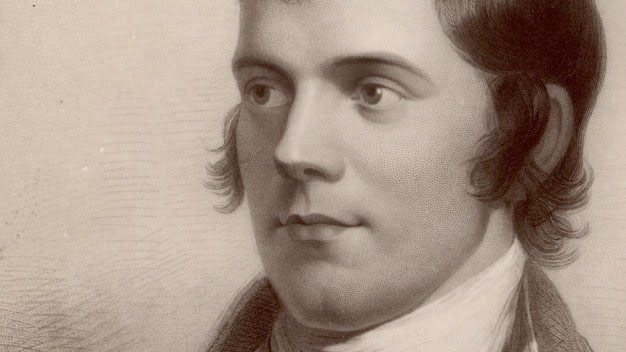
Robert Burns
Robert Burns (25 January 1759 - 21 July 1796) was a Scottish poet and lyricist. He's regarded as the national poet of Scotland and he's celebrated worldwide. He's te best known of the poets who have written in the Scots language, but a lot of his poems was written in English and some in Scots dialet. He is regarded as a pioneer of the Romantic movement, and after his death he became a great source of inspiration to the founders of both liberalism and socialism, and a cultural icon in Scotland. As well as making original compositions, Burns also collected folk songs from across Scotland, often revising or adapting them. His poem (and song) "Auld Lang Syne" is often sung at Hogmanay (the last day of the year), and "Scots Wha Hae" served for a long time as an unofficial national anthem of the country. 
Other poems and songs of Burns that remain well known across the world today include "A Red, Red Rose"; "A Man's a Man for A' That"; "To a Louse"; "To a Mouse"; "The Battle of Sherramuir"; "Tam o' Shanter"; and "Ae Fond Kiss".

This is the poem "A Red, Red Rose":
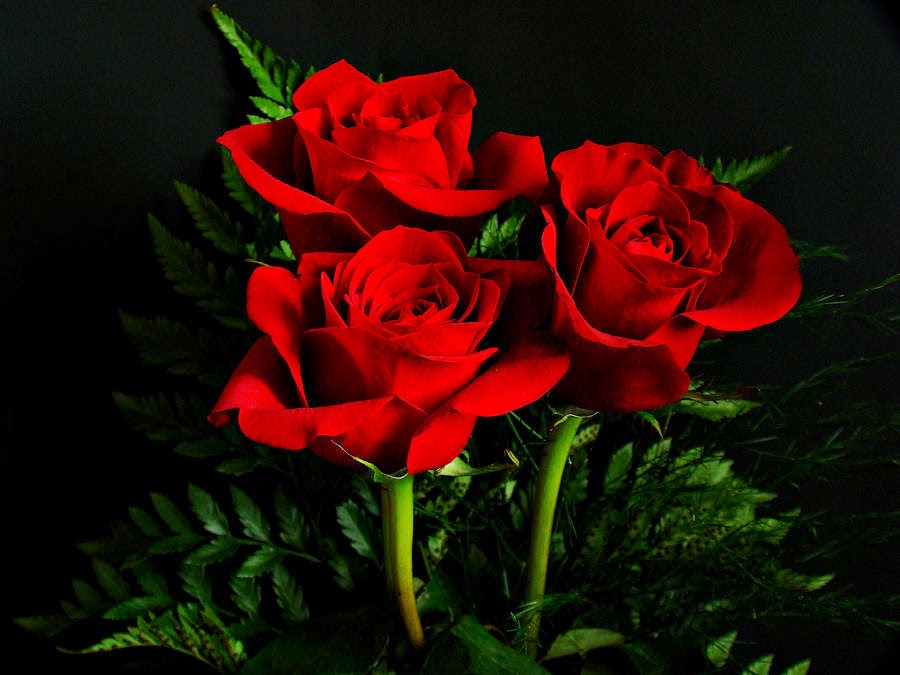
O my Luve's like a red, red rose
That’s newly sprung in June;
O my Luve's like the melodie
That’s sweetly play'd in tune.

As fair art thou, my bonnie lass,
So deep in luve am I:
And I will luve thee still, my dear,
Till a’ the seas gang dry:

Till a’ the seas gang dry, my dear,
And the rocks melt wi’ the sun:
I will luve thee still, my dear,
While the sands o’ life shall run.

And fare thee well, my only Luve
And fare thee well, a while!
And I will come again, my Luve,

Tho’ it were ten thousand mile.

Burns suppers
Burns Night, in effect a second national day, is celebrated on Burns's birthday, 25 January, with Burns suppers around the world, and is more widely observed in Scotland than the official national day, St. Andrew's Day.
This is the haggis
The basic format starts with a general welcome and announcements, followed with the Selkirk Grace. After the grace comes the piping and cutting of the haggis, when Burns's famous "Address to a Haggis" is read and the haggis is cut open. The event usually allows for people to start eating just after the haggis is presented. At the end of the meal, a series of toasts and replies is made. This is when the toast to "the immortal memory", an overview of Burns's life and work, is given. The event usually concludes with the singing of "Auld Lang Syne".


Commenti

Post popolari in questo blog

Margaret Thatcher

Margaret Thatcher was Britain's first female prime minister (1979-1990). She was known for her tough uncompromising, conservative political views, and became dubbed as ‘The Iron Lady’. On the UK domestic front she instituted many free market reforms, implemented the controversial poll tax and reduced the power of trades unions. She was active also on the foreign front as she cultivated a close relationship with American President Donald Regan. Early life Margaret was born 13 October 1925 in Grantham. Her father owned a grocery store and was active in the local Methodist Church and Liberal politics. Margaret won a scholarship to the local Kesteven and Grantham Girls’ School, where she became head-girl. She graduated in 1947 with second-class honours in chemistry. After graduating, she moved to Colchester, where she worked as a research chemist and long after in 1951 she was invited to stand as the Conservative candidate in the safe Labour seat of Dartford. Although she lost, s...

The Physician's Tale

This is a domestic drama about the relationship between a daughter and her father and it is one of the earliest poems in English about such subjects and relationships. Virginius, a nobleman of Rome, has a beautiful, fourteen-year-old daughter. She is spotted one day by a judge, Appius, who decides he must have her and forms a plan. His accomplice, a "churl" by the name of Claudius, claims in court that Virginia is his run-away slave and Appius decrees that her real father must relinquish her to the court. Virginius goes home and tells his daughter he must kill her to protect her honour. She resigns herself to her fate and swoons, and he cuts her head off. He takes her head to the court and when Appius demands his exucution for murder, the populace instead rises up and deposes the corrupt official. Appius kills himself in jail, but Virginius spares Claudius' life and condemns him to exile instead.  The Physician's Tale is usually regarded as an early work of Chauce...

Winston Churchill

Sir Winston Churchill (30 November 1874 – 24 January 1965) was a British politician and author, best known as Prime Minister of the United Kingdom during the Second World War.  Churchill was famous for his stubborn resistance to Hitler during the darkest hours of the Second World War. Winston was born at Blenheim Palace, Woodstock near Oxford to an aristocratic family.  He wasn’t the best student, having a rebellious nature and was reportedly slow to learn; but Churchill excelled at sports and joined the officer cadet corps, which he enjoyed.  On leaving school, he went to Sandhurst to train as an officer. After gaining his commission, Churchill sought to gain as much active military experience as possible. He used his mothers connections to get postings to areas of conflict. The young Churchill gained postings to Cuba, and North West India. He also combined his military duties with working as a war correspondent.  In 1899, he resigned from the military and pur...